
Recorded Without Consent by Meta Glasses? Privacy Lawyer Explains
In Maryland it is illegal to record a private conversation without the consent of everyone in it, and that includes being recorded without consent by Meta glasses or any other camera glasses. Maryland is an all-party consent state. If someone recorded you with smart glasses without telling you, or posted video of you taken inside your home or another private place, you may have claims under the Maryland Wiretap Act and Maryland’s invasion of privacy laws.
Whitney, LLP has experience representing clients who were recorded by smart glasses without consent, including representing a Frederick County family in a lawsuit against a contractor who recorded a service call at their home with Ray-Ban Meta glasses and posted the video to the business’s Instagram account. We represent victims of illegal recording and invasions of privacy across Maryland and have recovered significant compensation in privacy violation cases, including a including a $260,000 non-consensual intimate image disclosure settlement Whitney, LLP recovered arising out of private photographs being distributed without consent. We also represent victims of illegal recordings in class actions when a business has a practice of recording their customers on the phone and in their home without obtaining consent first.
Call (410) 583-8000 or contact us online for a free case evaluation. Attorney fees and expenses may be recovered from the compensation we recover, and the Wiretap Act and Consumer Protection Act both allow the court to order the other side to pay attorney’s fees. Past results are not a guarantee of future outcomes, and all cases are different.
Watch our Youtube channel for our video on invasion of privacy and other cases we handle.
Do I Have a Smart Glasses Invasion of Privacy Case? Two Quick Questions
- Were you in a private setting? Your home, a car, an office, a medical or treatment room, a dressing room, a private meeting, at a restaurant or other setting where you expected privacy. If you are not sure, we can analyze the situation to determine if it was legally considered a private setting.
- Was any of the conversation, including spoken words, texts or emails, recorded? If the glasses captured your words or electronic communications, Maryland’s strongest recording law, the Wiretap Act, likely applies.
If you answered yes, call us. You do not need to have seen the glasses recording. Most of our clients never did, they found out after-the-fact.
Common Situations With Smart Glasses Secretly Recording
- The contractor in your home. A mechanic, plumber, mover, cleaner or installer wears camera glasses during a service call and the footage ends up on the business’s social media.
- At a business. Even if you are at a business getting work done or seeking a consultation, you may still have an expectation of privacy, and your consent would be needed to record you.
- The coworker or boss. Someone at work records a private conversation, a meeting or a confrontation through their glasses.
- The stranger in public at the gym, store or restaurant. You find yourself in a “reaction” or “caught on camera” video you never agreed to.
- Your ex or acquaintance. Someone you know uses camera glasses to record you in a private moment, whether or not they share it.
We Help People Recorded Without Permission by Smart Glasses
Contact us if any of the following happened in Maryland:
- Someone wearing Meta glasses or other camera glasses recorded a private conversation with you without telling you.
- Video or audio of you was posted online or sent to others without your consent.
- You were recorded anywhere that you had a reasonable expectation of privacy.
- Your children were recorded or posted online without your permission.
- Someone used smart glasses to identify you, look you up, or “dox” you.
You do not need to know which law was violated before contacting us. Tell us what happened, where it happened and where the video ended up. Most of our clients were not aware that a single secret recording can violate multiple laws.

Why You Probably Could Not Tell You Were Being Recorded
Almost none of the people who were recorded and contact us saw the recording happen. They learned about it afterward, usually because they were told about it by the person who recorded it, or a friend, coworker or relative saw the video online and told them, or because the business posted it.
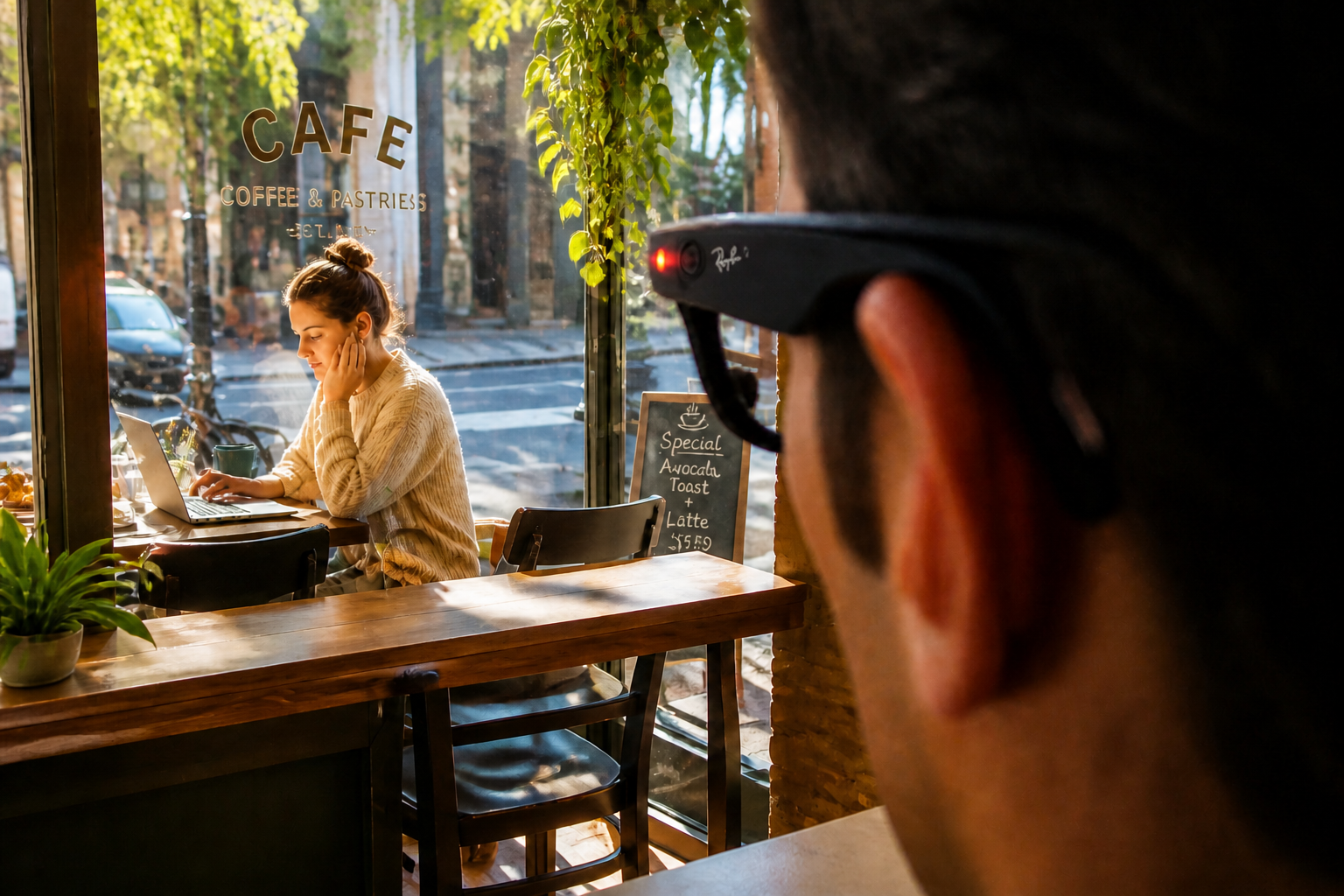
- The glasses look like ordinary eyewear. Ray-Ban Meta and Oakley Meta frames are designed to be indistinguishable from regular glasses at a conversational distance.
- The recording light is small and easy to defeat. Meta built in a white LED that is supposed to light up during recording, but it is easy to miss in daylight, and wearers can cover or disable it. Hundreds of people a month search online for ways to turn it off.
- The glasses record audio. Built-in microphones capture what you said.
- The glasses keep records. Videos sync to the wearer’s phone through the Meta AI app and often to cloud storage. Those accounts, the phone and the glasses themselves are evidence we can obtain through a lawsuit, even if the post was deleted.
Do not confront the person in a way that gives them a reason to delete files. Contact us first and we will send a preservation demand. For Maryland’s recording rules generally, see Recorded Without Permission: Maryland Recording Laws.
Is It Illegal to Record Someone Without Their Permission in Maryland?
Yes, in most private settings. Maryland is a two-party consent state, which really means an all-party consent state. Under the Maryland Wiretapping and Electronic Surveillance Act, Md. Code, Courts & Judicial Proceedings § 10-402, it is unlawful to intercept or record an oral communication unless everyone who is part of the conversation consents. The person wearing the glasses does not get to consent for you.
The Act applies to in-person conversations, not just phone calls, as long as the people speaking had a reasonable expectation that the conversation was private.
If you were secretly recorded, Start your free case evaluation or call (410) 583-8000.
The Maryland Wiretap Act Gives Victims a Civil Claim
Illegal recording is a felony in Maryland, but criminal charges are up to prosecutors. What matters more for most of our clients is that the Act also creates a private right of action to bring in civil court, which is what Whitney, LLP’s invasion of privacy lawyers do. Significant compensation can be recovered in secret recording and invasion of privacy cases, and Whitney, LLP has recovered significant compensation for clients in these types of cases. Under CJP § 10-410, a person whose communication was intercepted, disclosed or used in violation of the Act can sue for:
- Actual damages, but not less than liquidated damages of $100 per day of violation or $1,000, whichever is greater
- Punitive damages
- Reasonable attorney’s fees and litigation costs
Disclosing or using an illegally recorded conversation is a separate violation from making the recording. Posting the video to Instagram, sending it to friends, or using it in a business advertisement each adds to the claim.
Our post Can I Sue Someone for Recording Me Without My Permission in Maryland? covers the Wiretap Act in more detail. If the recording happened at your job, see Can I Sue My Employer for Recording Me?
What If the Wearer Claims the Light Was On?
A recording light is not consent. Consent under the Maryland Wiretap Act means you actually agreed to be recorded, or at a minimum were clearly told and continued the conversation anyway. A small LED that you did not see, did not understand, were mislead about or were not told about does not meet that standard. Whether the light was on is a fact we investigate; it is not a defense that ends the case. We have found that while many excuses can be made, fabricated excuses rarely hold up in court.

Can You Sue for Invasion of Privacy in Maryland?
Absolutely, and Whitney, LLP has experience successfully bringing multiple types of invasion of privacy claims. Maryland recognizes four separate invasion of privacy torts, and a single smart glasses recording that is posted online can violate multiple types.
1. Intrusion upon seclusion. Intentionally intruding on someone’s private affairs or seclusion in a way that would be highly offensive to a reasonable person. Secretly recording a person inside their own home is the classic example. The intrusion is complete the moment the recording is made, whether or not it is ever shared.
2. Unreasonable publicity given to private life. Publishing private facts about a person that are not of legitimate public concern, where the publication would be highly offensive. Posting video of what happened inside your home, your medical appointment, or a private conversation fits this claim once the video goes to social media.
3. Appropriation of name or likeness. Using someone’s image or identity for a commercial benefit without consent. When a business posts video of a customer to promote itself, it is trading on the customer’s likeness. We see in the smart glasses cases, where the recording was made for content.
4. False light. Publishing something that places a person before the public in a false and highly offensive light. A video edited with captions or commentary that misrepresent what happened can support this claim.
Our Invasion of Privacy Lawyer for Maryland page explains each of these claims and the evidence used to prove them. These are the same claims we bring in hidden camera cases and nonconsensual image cases, and cases involving secret GPS trackers placed by private investigators.
Negligence Claims Against the Business for Secret Recordings
Businesses can be held responsible for the actions of their employees. When an employee records a customer with smart glasses, the business can be liable as well. An employer that lets its workers wear camera glasses into customers’ homes without a consent policy, training or supervision can be liable for negligent training and supervision, and for negligence in failing to obtain consent before recording.
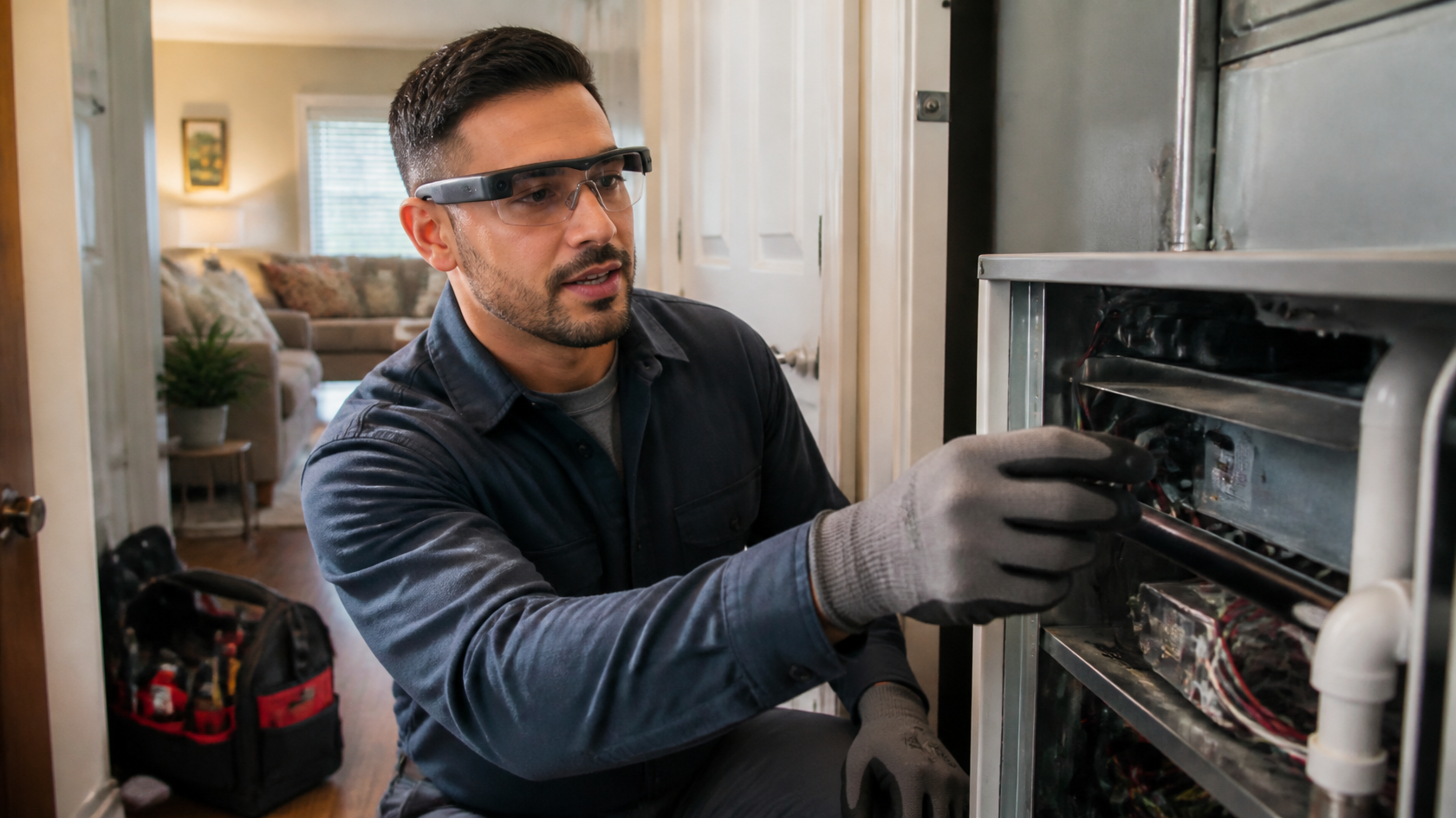
Case Study: Contractor Records a Service Call With Meta Glasses and Posts It to Instagram
Whitney, LLP represents a Frederick County family in a lawsuit filed against a contractor who came to their home.
What happened. Our client hired a contractor to come to her home. The contractor arrived wearing Ray-Ban Meta glasses. At no point did he tell her he was recording, ask her permission, or explain that the visit would be filmed. She later learned that video of the service call had been posted to the business’s Instagram account as promotional content.
The claims. The complaint, filed in Circuit Court, includes seven counts, including:
- Violation of the Maryland Wiretap Act, for recording a private conversation without consent and then disclosing it
- Intrusion upon seclusion, for secretly recording inside the home
- Unreasonable publicity given to private life, for posting the video
- Appropriation of likeness, for using our clients’ images to promote the business
- Violation of the Maryland Consumer Protection Act, for recording a consumer during a service transaction without disclosure
- Negligence, for failing to obtain consent before recording
- Negligent training and supervision, against the business for allowing camera glasses on service calls with no consent policy
Past results and pending claims do not guarantee a similar outcome. But the fact pattern is one we expect to see more often: a business visitor wearing camera glasses, a homeowner who was never told, and a video that ends up online.
If you were secretly recorded, Start your free case evaluation or call (410) 583-8000.
What Compensation Can a Smart Glasses Recording Claim Recover?
Maryland law does not require a financial loss to recover compensation for an illegal recording or an invasion of privacy – emotional distress is the most common claim. Depending on the facts and the claims available, we may pursue:
- Statutory damages under the Wiretap Act: at least $1,000, or $100 per day of violation, whichever is greater, for each violation
- Emotional distress: the humiliation, anxiety and loss of security that come from learning your home or a private conversation was recorded and shared
- Harm to reputation and relationships: where a video was seen by coworkers, neighbors, family or an online audience
- Economic damages: monetary loss actually resulting from the illegal recording
- Punitive damages: available under the Wiretap Act and for intentional privacy torts where the conduct was deliberate or malicious
- Damages for children: a minor who was recorded or posted has their own claims, brought through a parent
- Attorney’s fees: the Wiretap Act and the Consumer Protection Act both allow the court to order the defendant to pay them
Removal of the Video Is Only the Start
Do not sign a release or accept a refund in exchange for dropping your claims without talking to a lawyer. The first offer rarely reflects what the claim is worth. Some businesses, when confronted, take the video down and offer an apology or a refund. Taking the video down does not undo the recording, the posting, or the number of people who already saw it.
What to Do If You Were Recorded by Meta Glasses Without Consent
Start by preserving what you can. You do not need everything before you call us, but the following makes a case much stronger.
- Screen-record or save the video where it was posted. Capture the post itself, the account name, the date, the caption, the view count, and the comments. A screenshot alone misses the audio.
- Save the link. Copy the URL of the post and the profile. Videos get deleted once a business realizes there is a problem.
- Keep your paperwork and communications. Invoices, text messages and emails are important evidence.
- Identify witnesses. Anyone who saw the video or was in the room.
- Do not demand that the person delete it. Deletion destroys evidence. We will send a preservation letter requiring the wearer and the business to keep the glasses, the synced files and the account data.
- Contact our office. Tell us what happened and where the video ended up, and we will go from there.
If the recording involved intimate images, additional Maryland and federal laws may apply.

Daniel Whitney, Jr. and Daniel Whitney of Whitney, LLP
How Whitney, LLP Builds a Smart Glasses Recording Case
After initial investigation, we often file suit, and discovery gives us what a pre-litigation demand letter cannot: the defendant can be compelled to provide written responses to our written questions and provide the actual data documents and glasses involving the case, including but not limited to the wearer’s Meta account data, the files synced from the glasses, social media records and sworn testimony from the wearer and the business owner about their recording practices. By documenting and confirming who saw the video and how it affected you, the evidence is developed to make the case as strong as possible.
About Whitney, LLP’s Invasion of Privacy Attorneys
Daniel W. Whitney, Jr. is a partner at Whitney, LLP, a Towson consumer protection firm founded in 1992. He built the firm’s consumer protection and invasion of privacy practices, has filed illegal recording, hidden camera, GPS tracking and nonconsensual image lawsuits across Maryland, and has served as class counsel in multiple consumer protection class actions. He is a 2010 graduate of Widener University School of Law. He works alongside the firm’s attorneys on privacy cases.
Discuss Your Smart Glasses Recording Case With Whitney, LLP
If someone recorded you with Meta glasses or another hidden camera without your consent in Maryland, or posted video of you taken in a private setting, tell us what happened.
You do not need to know what your case is worth or have every screenshot before calling. We will explain what information will help us evaluate your situation.
Call (410) 583-8000 or contact Whitney, LLP online for a free illegal recording case evaluation.
What Happens When You Contact Us?
Our intake staff gathers the basics: a timeline, where the video was posted, and what you have saved. An attorney reviews the case and we generally get back to you within about a week. If it is a fit, we explain the next steps. Case evaluations are free, and pre-litigation communications can be handled remotely, including through phone call and Zoom.
Meta Glasses Recording FAQs
Is Maryland a two-party consent state?
Yes. Maryland requires the consent of all parties before a private conversation can be recorded. Maryland is one of roughly ten states with this rule.
Can someone legally record me with Meta glasses in public?
It depends on where you were and what was captured. Recording a private conversation, even in a public place, can be illegal. Tell us the setting and we will evaluate it.
Does the recording light on Meta glasses count as notice or consent?
No. Consent means you agreed to be recorded. A small LED you did not notice or understand is not agreement. If the wearer covered or deactivated the light, that is evidence the recording was meant to be hidden.
Can I sue if the video was already deleted?
Yes. The recording and the posting already happened, and the claims exist whether or not the video is still online. Save what you can and contact us.
My child was in the video. Do they have a claim?
Yes. A minor who was recorded or posted has their own privacy claims.
How long do I have to file an illegal recording lawsuit in Maryland?
Maryland generally allows three years from the date of the recording or the posting to file a civil lawsuit, or from the date the illegal recording was reasonably discovered.
Do I have to pay anything for a case evaluation?
No. Case evaluations are free.
How do I get a video of me taken down from Instagram or TikTok?
You can report the post through the platform’s privacy reporting tools, and a demand letter from our office may get a business to remove it quickly. Save a screen recording of the post before it comes down, then contact us.
What if the glasses were not Meta glasses?
The brand does not matter. Ray-Ban Meta, Oakley Meta, Snap Spectacles, Xreal, and generic camera glasses sold online all raise the same issue: a camera and microphone on someone’s face, recording without your knowledge. Maryland law applies the same way to all of them, and to body cameras, hidden cameras and phones.
Representing Illegal Recording Victims Across Maryland
Whitney, LLP handles smart glasses and hidden camera recording cases in every Maryland county from our office in Towson. Illegal recording and invasion of privacy claims are filed in the circuit court for the county where the recording happened, and we appear in courts statewide. Consultations and case preparation are handled by phone and video, so you do not need to live near our office to work with us.
We offer representation to clients in:
- Baltimore City and Baltimore County – Baltimore, Towson, Glen Burnie, Dundalk, Owings Mills
- Montgomery County – Rockville, Silver Spring, Gaithersburg, Germantown, Bethesda
- Prince George’s County – Bowie, College Park, Laurel, Upper Marlboro
- Anne Arundel County – Annapolis, Glen Burnie, Severna Park
- Howard County – Columbia, Ellicott City
- Frederick County – Frederick
- Washington County – Hagerstown
- Charles County – Waldorf, La Plata
- Harford, Carroll and Cecil Counties
- The Eastern Shore – Salisbury, Ocean City and the surrounding counties
If your county is not listed, contact us anyway. We take illegal recording cases throughout Maryland.
More From Whitney, LLP on Invasion of Privacy and Illegal Recording
- Invasion of Privacy Lawyer for Maryland – hidden cameras, secret recordings and the four privacy torts
- Recorded Without Permission: Maryland Recording Laws – when recording is legal and illegal in Maryland
- Can I Sue Someone for Recording Me Without My Permission in Maryland? – how to file a Wiretap Act lawsuit
- Can I Sue My Employer for Recording Me? – workplace recordings and employee privacy rights
- Can a Private Investigator Legally Put a GPS Tracker on My Car in Maryland? – secret trackers and intrusion claims
- Maryland Divorce Privacy Violations: Sue for Illegal Surveillance & Stalking – spousal spying, GPS and wiretapping
If you were secretly recorded, Start your free case evaluation or call (410) 583-8000.
Recent Consumer Fraud Posts
 Dealership Reported My Car Stolen – Our Client Won $190,000
 Servicemembers Relief Act Lawyer in Maryland – No Early Lease Termination Fees
 Forestville Illegal Eviction Lawyer – $140k Settlement
 Koons Complaint Lawyer – $22,465.50 for Tax Credit Misrepresentation
 Carzlane Complaint Lawyer – $290k Verdict Against Carzlane